


This guide walks through the silicone vibrator manufacturing process from start to finish: material selection, mold engineering, surface finishing, electronics assembly, and the quality checks that separate consistent production from costly surprises. We've built the same process into our silicone vibrator range and other body-contact products for years. The goal is to give you enough working knowledge to evaluate any manufacturer you're considering.
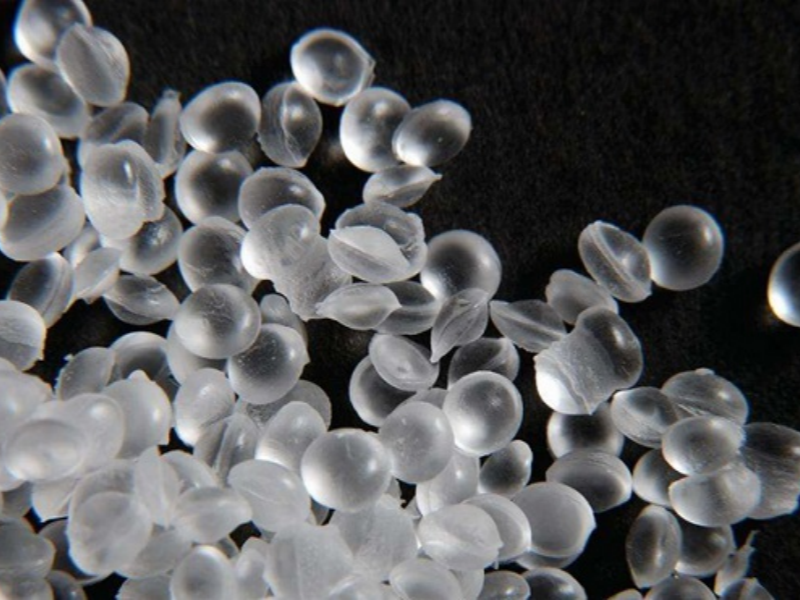
The Material Decision Shapes Everything That Follows
Silicone dominates premium adult product manufacturing for reasons worth understanding rather than simply accepting. Non-porous, chemically inert, thermally stable, hypoallergenic-these properties make it appropriate for products that contact sensitive tissue repeatedly. But knowing why silicone is the best material for adult toys starts with understanding that not all silicone is the same material in any meaningful sense.
Platinum-Cured vs. Peroxide-Cured Silicone
Curing method determines the purity and safety profile of the finished material. Platinum-cured silicone uses a platinum catalyst in an addition-cure reaction that leaves nothing behind-no residual catalyst, no by-products. The result is chemically inert and meets the requirements for ISO 10993 biocompatibility testing, the same standard applied to medical implants and surgical equipment. This is why reputable adult product manufacturers specify platinum curing and provide documentation to confirm it.
Peroxide-cured silicone is cheaper to process but leaves trace residues in the cured material. It's appropriate for many industrial applications-not for products with extended skin contact. When talking to any prospective supplier, ask directly: which curing agent does your silicone formulation use? If the answer is vague or evasive, treat that as a red flag early in the conversation.
LSR vs. HCR: The Two Forms Silicone Takes in Production
Liquid Silicone Rubber (LSR) is a pumpable two-part system designed for injection molding. High Consistency Rubber (HCR) is a solid, dough-like compound used in compression molding. For vibrators-where dimensional accuracy, ergonomic curves, and textured surfaces all matter-LSR injection molding is the professional standard. HCR and compression molding have lower tooling costs, which is why some manufacturers default to them, but the trade-off in precision is real and shows up in the finished product.
Shore A Hardness: Specify a Number, Not a Word
Silicone hardness is measured on the Shore A scale. Most vibrators fall in the 20A–45A range: softer formulations (20A–30A) produce a skin-like feel suited for external-contact products; firmer ones (35A–45A) provide enough structure for insertables without becoming rigid. Don't accept "soft" or "medium" as a specification from a manufacturer-ask for the Shore A value of their compound. Our Shore A hardness guide explains how these numbers translate to finished-product feel before you lock in a design spec.
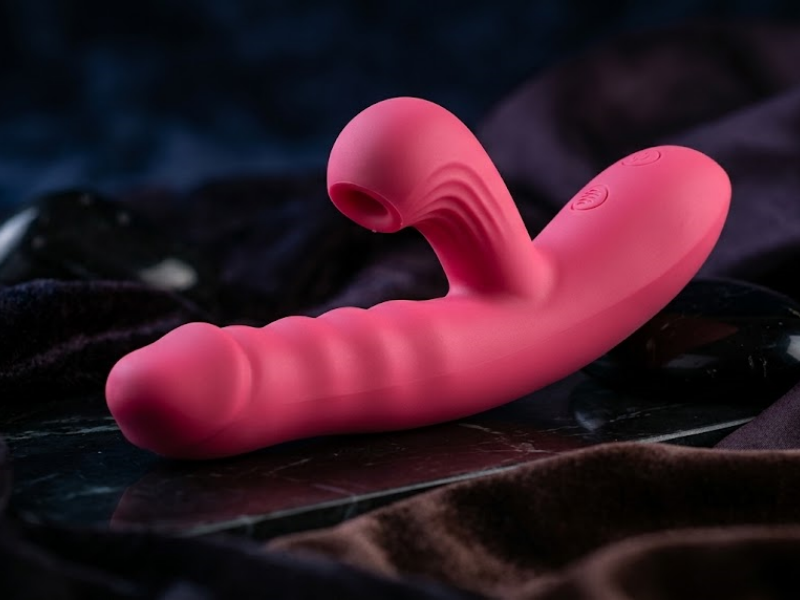
Safety Certifications Worth Requiring from Your Supplier
Understanding what body-safe actually means at the manufacturing level matters when you're sourcing from a factory rather than selecting from a retail shelf. The two material standards that matter most for silicone body-contact products are ISO 10993 (biocompatibility: cytotoxicity, sensitization, and irritation testing) and USP Class VI (biological reactivity). Both confirm the material won't cause toxic or sensitizing responses in human tissue contact. Ask for a Declaration of Conformity citing either standard for the silicone compound specifically-not for the finished product generically.
For products sold in the EU, REACH compliance is a legal requirement: it covers phthalates, heavy metals, and other restricted substances. RoHS applies to the electronic components inside a vibrator (PCB, motor, charging circuit) rather than the silicone body. A factory that can't produce REACH testing documentation for their silicone compound is not one you should be importing from for European or UK retail.
One field test worth running at the sample stage: stretch a piece of silicone firmly and watch for whitening. Pure silicone holds its color under tension. If it turns white, the manufacturer has diluted the compound with fillers to reduce material costs. It won't replace lab testing, but it gives you immediate information when samples arrive. For a broader material safety overview, see our guide on body-safe sex toy materials.
Inside the Factory: Seven Steps from Compound to Finished Unit
The following sequence covers how silicone vibrators are produced in a professional manufacturing environment. Silicone butt plug production and kegel ball manufacturing follow the same core steps, with geometry and hardness specifications adjusted by product type.
Step 1: Design and Mold Engineering
Production begins with a CAD file and ends with a precision steel mold. The mold defines the product's geometry, and its quality determines the quality of every unit that comes out of it-there is no recovering from a poorly engineered mold once production starts.
One decision buyers rarely think to ask about: parting line placement. The parting line is the seam where the two mold halves meet. Its location determines how visible and tactile that seam is on the finished product and how much hand-finishing labor is needed downstream. Experienced mold engineers position it away from high-contact surfaces. Flash-thin silicone fins that form at the mold joint-can appear at gaps under 0.01mm, so mold precision directly controls the finishing workload and the surface quality of every unit that follows.
Step 2: Silicone Compounding and Color Matching
Technicians combine the two-part LSR system by weight using calibrated mixing equipment. The ratio must be exact-any deviation affects curing behavior, final hardness, and material purity. Pigments for custom colors are introduced at this stage using dispersion methods. Achieving batch-to-batch consistency requires documented color references and controlled mixing, not visual estimation. How custom color matching works in silicone production explains why this step matters for brand consistency across multiple production runs.
After mixing, the compound goes through vacuum degassing: placed under vacuum to remove air bubbles introduced during blending. Skipping this step produces voids and surface blemishes that only become visible after demolding-the kind of defect that goes unnoticed in production and generates returns from end customers. Ask any factory you're evaluating whether their mixing room has inline vacuum deaeration equipment. The presence or absence of that equipment tells you more than any sales pitch.
Step 3: Injection Molding
The degassed LSR compound is injected into a preheated closed mold and held at 150–200°C for a controlled cure cycle until the silicone cross-links and solidifies. Injection molding delivers dimensional repeatability that compression molding cannot match. For any feature requiring a precise fit-a textured grip surface, a motor housing, a charging port cavity-injection molding is the appropriate method. Compression molding has lower tooling costs and suits simpler shapes, but the dimensional trade-off is real.
Step 4: Demolding and Flash Removal
Extracting a freshly cured silicone part requires care. Soft silicone tears if removed incorrectly, so high-volume lines use robotic demolding for consistency; smaller operations rely on skilled workers following specific release sequences to avoid distortion.
Nearly all molded silicone has some flash. In small-batch production it's trimmed by hand with small blades or scissors. In high-volume runs, cryogenic deflashing is more efficient: parts are briefly chilled until flash turns brittle, then tumbled to break it off cleanly. Both methods reach the same target-complete removal of any residual seam that could cause discomfort or trap contamination during use.
Step 5: Surface Polishing and Finishing
Skilled inspectors wearing gloves run their hands across every unit checking for parting line ridges, flash remnants, rough texture patches, or any micro-edge perceptible to a user. Surface texture is determined primarily by the mold cavity: mirror-polished for glossy, bead-blasted for satin or matte. Laser-etched patterns can add grip texture or subtle branding.
The standard at this stage is a surface that is completely smooth to touch, with no features that could trap material during use. This is one of the reasons platinum silicone's non-porous surface matters: unlike porous materials, it leaves nothing for bacteria to colonize between uses-a property that holds only if the finishing step is done properly.
Step 6: Component Assembly - Motor, PCB, and Waterproofing
This step integrates the motor, PCB, battery, and charging interface with the silicone body. It involves more specification decisions than buyers typically realize, and the choices made here affect how a product is positioned and perceived as much as the silicone itself.
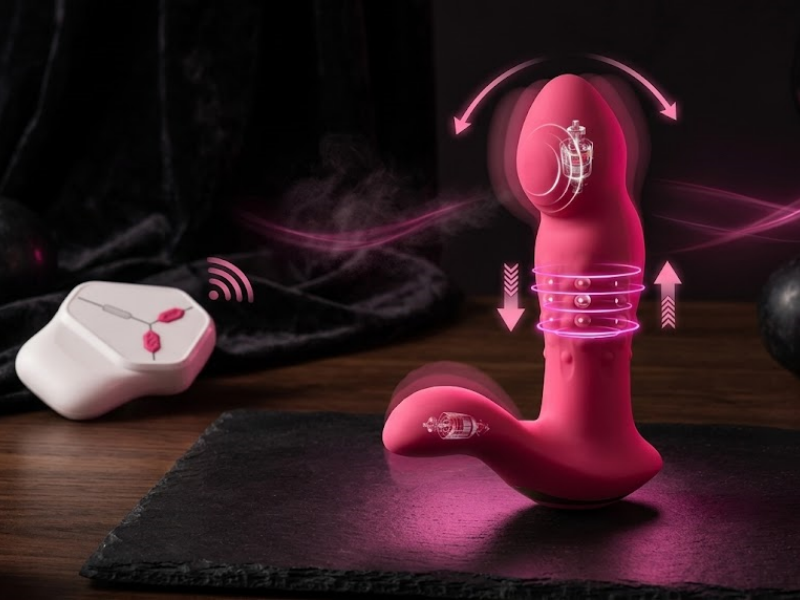
Motor type is a product decision, not just a cost decision. Eccentric rotating mass (ERM) motors are the cheaper option, producing a wide, buzzy vibration that's acceptable for budget-positioned products. Linear resonant actuator (LRA) motors are more expensive but generate targeted, frequency-precise vibration with a more refined feel. For any mid-premium or premium product, LRA is the correct specification. State this explicitly to your manufacturer-don't assume they'll default to it.
Waterproofing is sealed at this stage. Achieving reliable IPX7 compliance (submersible to 1 meter for 30 minutes) requires sealed gaskets, adhesive bonding, or overmolding at every penetration point: the charging interface, the seam between silicone and housing, and any control access point. The charging port is historically the weakest point in the design. Magnetic charging pin systems tend to outperform USB-C in waterproofing reliability due to seal geometry, though USB-C is increasingly preferred for consumer convenience. Know which matters more for your market and specify it in writing.
Assembly should take place in a controlled environment, free of dust and static, to protect electronics from contamination that compromises long-term reliability.
Step 7: Final Quality Control
Every unit undergoes visual inspection, dimensional verification, function testing across all vibration modes and intensity levels, and charging and runtime confirmation. IPX waterproofing is validated by submersion or pressure testing on a sample per AQL standards. A factory that can't tell you their AQL defect acceptance rate without looking it up is not operating a structured QC process-that question is one of the most revealing you can ask.
Batches destined for EU or North American retail may require third-party chemical testing before shipment. Discuss this timeline at the start of production planning, not after a shipment is ready to leave.
Silicone vs. TPE vs. ABS: Choosing the Right Material for Your Product
| Property | Platinum Silicone | TPE / TPR | ABS Plastic |
|---|---|---|---|
| Body-safe | Yes | Varies by formulation | Yes (BPA-free) |
| Non-porous | Yes | No | Yes |
| Sterilizable | Yes | No | Wipe-clean only |
| Durability | 10+ years | 1–3 years typical | Decades |
| Tactile feel | Silky, skin-like | Soft | Rigid |
| Phthalate-free | Always | Ask supplier | Typically yes |
| Manufacturing cost | Higher | Lower | Mid-range |
| Best application | Vibrators, insertables, skin-contact bodies | Budget accessories, non-insertable grips | Internal frames, motor housings, bullet vibrators |
TPE's porosity is the practical disqualifier for insertable products-it cannot be fully sterilized, and this limitation is increasingly understood by informed consumers. For a full comparison covering odor, cleaning differences, and shelf life, see our TPE vs. silicone breakdown.
Red Flags to Watch for When Evaluating a Factory
Most manufacturing quality problems are predictable, and most are detectable before you place a production order-if you know what to look for during sampling and auditing.
- The factory cannot tell you which curing agent their silicone uses, or refuses to share the material TDS (Technical Data Sheet).
- No vacuum deaeration equipment is visible in the mixing room. This step is not optional for bubble-free silicone at production quality.
- They cannot specify the Shore A hardness of the compound they plan to use for your product, or are unwilling to adjust it to your spec.
- IPX waterproofing is claimed on their product sheets but no testing records exist-only a specification label.
- No third-party REACH or phthalate test reports are available for their silicone compound. Qualified manufacturers keep these on file.
- Factory visits or third-party audits are refused or restricted without clear reason. A supplier worth a long-term relationship welcomes professional inspection.
For a broader framework on supplier selection, our guide on what separates a reliable adult toy supplier from one that will create problems downstream covers additional due diligence steps and what to look for during a factory visit.
Questions That Reveal a Manufacturer's Real Capabilities
These aren't trick questions. A capable manufacturer answers them without hesitation in a first conversation.
- Which grade of platinum-cured silicone do you use? Can you share the material TDS?
- Do you have ISO 10993 or USP Class VI documentation for your silicone compound?
- What Shore A hardness do you recommend for this product type, and can it be adjusted if I want something firmer or softer?
- What AQL defect acceptance rate do you operate at, and can I review QC records from a recent comparable batch?
- Who owns the tooling after production? Is the mold fee applied against a minimum production run?
- Can I arrange a pre-shipment inspection or send a third-party auditor?
Any manufacturer set up for serious custom silicone adult toy production answers all of these comfortably. Difficulty with any of them is a signal worth weighing before you commit to tooling.
Frequently Asked Questions
How long does it take to go from concept to first production sample?
Mold fabrication for a new product typically runs 4–8 weeks. Simple two-cavity molds for compact vibrators sit at the shorter end; complex geometry or multi-cavity tooling takes longer. Add 1–2 weeks for sample approval and 3–5 weeks for the first production run. Plan 10–16 weeks total for a product going into production for the first time, and build that into your launch timeline from the start.
What is the difference between injection molding and compression molding for silicone vibrators?
Injection molding pumps liquid LSR directly into a precision heated mold-higher tooling cost upfront, but dimensional consistency is repeatable at scale and complex geometries are achievable. Compression molding uses solid HCR silicone pressed between mold halves: lower tooling cost, less precision, limited to simpler shapes. For vibrators, injection molding is the professional standard. The price difference in tooling is real; so is the difference in output quality.
Can platinum silicone be fully sterilized between uses?
Yes. Platinum-cured silicone can be boiled for 3–5 minutes, soaked in a diluted bleach solution, or autoclaved. Its non-porous surface leaves nothing for bacteria to colonize, which is one of the properties that distinguishes it from porous materials like TPE that can only be surface-wiped. Our guide to cleaning silicone sex toys safely covers method-specific recommendations and frequency.
What Shore A hardness should I specify for a silicone vibrator?
Insertable vibrators typically work well at 30A–42A-soft enough to flex with body contours, firm enough to hold shape under use. External-only products can go softer, around 20A–28A. Products with thin walls or complex internal geometry may need a firmer compound to withstand demolding forces without tearing. Specify a number rather than a descriptor when talking to your manufacturer, and confirm that target hardness is achievable in the platinum silicone compound they stock.
If you're developing a new product line and want to talk through material selection, mold specifications, or OEM options, contact us to discuss your project-we're happy to work through the details before a quote.


