


This guide covers what actually separates a reliable adult toy manufacturer from an unreliable one: how to evaluate materials and certifications, what your quality control questions should look like, how to structure your first inquiry, and the warning signs that should end a conversation before it goes further.
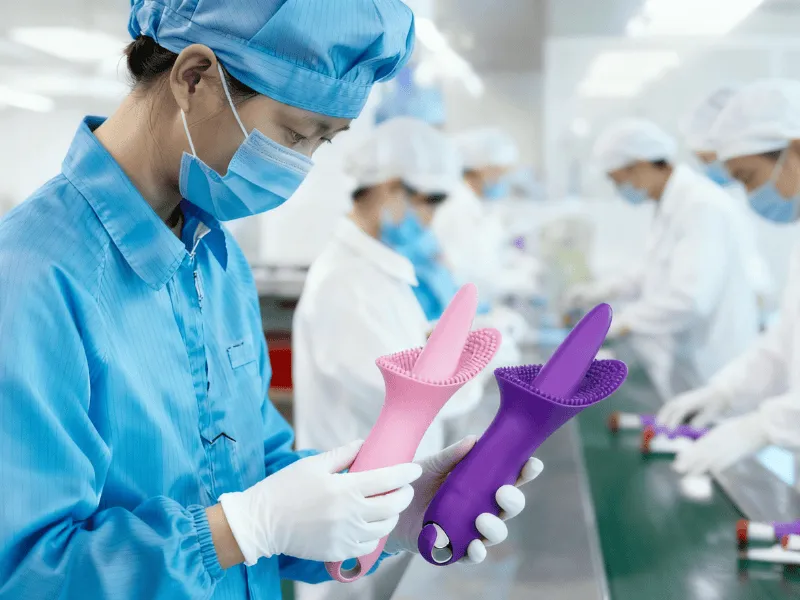
Manufacturer vs. Supplier: The Distinction That Changes Everything
Before reaching out to anyone, it helps to understand what you're actually looking for. The terms "manufacturer" and "supplier" get used interchangeably, but they describe very different relationships.
A manufacturer owns production equipment, employs engineers and production staff, and can build products from raw materials up. A supplier-sometimes called a trading company-sources finished or semi-finished goods from other factories and resells them. Suppliers are often easier to deal with at first: faster responses, lower minimums, broader catalogs. But you're working through an intermediary, which limits your visibility into actual production conditions, makes quality control harder to verify, and reduces your customization options.
For most brands building a private-label line, working directly with a manufacturer gives you better pricing, more reliable quality, and a cleaner path to product development. If you're just starting out with very small orders, a supplier may be a practical short-term entry point-but knowing the difference between an adult toy supplier and a direct factory matters when you're evaluating who you're actually talking to.
Understanding the Four Production Models
Once you know you want a manufacturer, you need to clarify which production model fits your stage and budget. Four terms come up constantly in this industry, and they're not interchangeable:
White label means buying a ready-made product as-is and putting your branding on it. Fastest to market, lowest upfront investment, but no differentiation-the same product is likely available under dozens of other brand names.
Private label lets you customize within an existing mold: color, packaging, sometimes minor feature tweaks. This is the most common starting point for new brands entering the mid-range market.
ODM (Original Design Manufacturing) means you provide a brief-shape, function, target user-and the manufacturer develops the design. You get a product that's more distinctly yours without taking on full engineering responsibility.
OEM (Original Equipment Manufacturing) is the most involved model. You supply complete specifications, technical drawings, and material requirements; the manufacturer executes them. Highest customization, highest cost, usually higher MOQs. This is typically the path for established brands with validated product concepts. If you want to understand how custom adult toy manufacturing actually works in practice, it's worth reading into the process before your first factory conversation.
Most new brands start with private label and move toward ODM or OEM once they have market validation and a clearer sense of what their product needs to do differently.

What to Actually Evaluate in a Manufacturer
1. Relevant Industry Experience
General manufacturing experience doesn't transfer well to adult products. The materials are specific, the ergonomic requirements are particular, and the regulatory environment varies by market. A factory that produces household electronics or cosmetic packaging may have excellent general processes but no real understanding of what makes a vibrator work reliably-or safely.
When assessing experience, ask for specifics rather than general claims:
- How long have you been producing adult products specifically, not just general consumer electronics or silicone goods?
- Can you show me products you've produced for other brands (under NDA if needed)?
- Do you attend industry trade shows such as eroFame, ANME, or the Shanghai International Adult Products Exhibition?
Attendance at trade shows is a meaningful signal. It indicates an investment in staying current with the category, direct exposure to retail buyer expectations, and a willingness to be publicly associated with the industry-all things a factory producing adult toys as a side line typically avoids.
2. Body-Safe Materials-and How to Verify Them
Material safety in adult products isn't a marketing claim. Sex toys come into direct contact with mucous membranes, which means substandard materials carry real health consequences: skin reactions, chemical irritation, and in some cases longer-term exposure to plasticizers and other harmful additives.
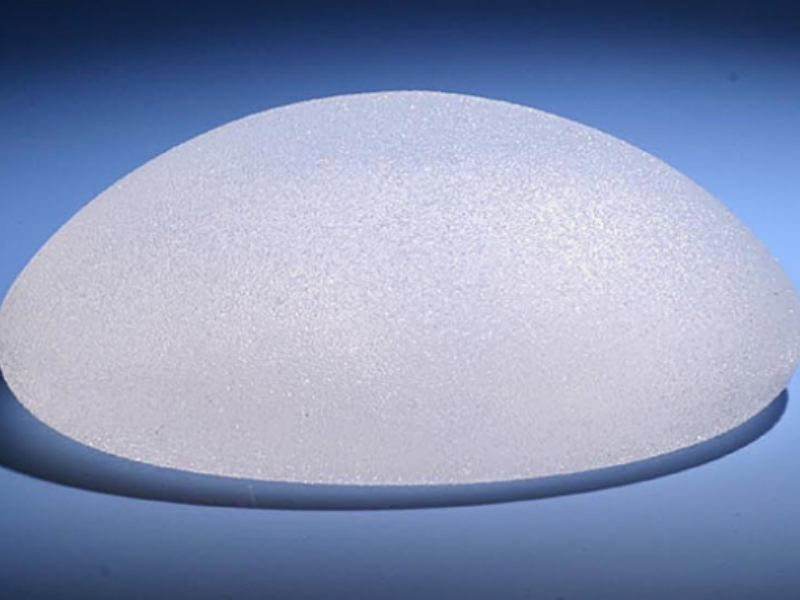
The accepted body-safe materials for adult products are medical-grade silicone, ABS plastic (for hard casings), stainless steel, and borosilicate glass. Medical-grade silicone in particular has become the industry standard for body-contact surfaces because it's non-porous, hypoallergenic, and can be sterilized.
Materials to specifically ask about and avoid include PVC, general rubber compounds, and "cyberskin" or "real feel" formulations without documented composition. Many of these contain phthalates-plasticizers that leach out of soft materials over time. Understanding what sex toys are actually made of and what each material's properties mean for safety is worth doing before you evaluate a supplier's material claims.
When a manufacturer claims to use medical-grade silicone, ask for:
- The silicone grade and manufacturer (e.g., Dow Corning, Shin-Etsu)
- Third-party test reports showing phthalate-free composition-specifically on finished products, not just raw material certificates
- Whether their silicone is single-component or a blended formulation (blended silicones with fillers are cheaper and can be harder to distinguish visually, but perform differently)
A factory that hesitates to provide this documentation is telling you something. Body-safe material standards aren't complicated to document-manufacturers who meet them are generally proud to show it.
3. Certifications: What They Cover and How to Check Them
Certifications are only worth what's behind them. A certificate image sent as a JPEG proves nothing on its own. Here's what the main certifications actually cover and how to verify each one:
CE marking is required for electronic products sold in the European Union and confirms conformity with EU safety and electromagnetic standards. To verify: ask for the Declaration of Conformity (DoC), which must name the notified body that assessed it. You can cross-check notified bodies at the EU's NANDO database.
RoHS compliance restricts hazardous substances-lead, mercury, cadmium, and others-in electronic products. Ask for third-party lab test reports, not a self-declaration. The lab should be ISO/IEC 17025 accredited.
REACH compliance is the EU chemical regulation most relevant to material safety. A REACH-compliant test report specifically looks for SVHCs (Substances of Very High Concern), which includes phthalates. This is the document you want when evaluating soft-material products.
FCC certification is required for electronic products sold in the United States. Every legitimate FCC-certified product has a unique FCC ID that can be verified directly at fcc.gov. If a manufacturer claims FCC certification but can't provide an FCC ID you can search, the certification isn't real.
ISO 9001 certifies that a factory has a documented quality management system in place-but it's a process certification, not a product safety guarantee. It tells you the factory has structured procedures; it doesn't tell you the products are safe. Always treat it as a supporting signal, not a primary credential.
4. Quality Control: What to Ask Beyond "We Have ISO"
ISO certification is a starting point, not an answer. Quality control in adult product manufacturing involves a series of specific checkpoints that you should ask about directly. Understanding what the production process actually involves helps you ask better questions.
- Incoming material inspection: Are raw materials-silicone, ABS, motors, batteries-tested before they enter production?
- In-process checks: Are there inspection points during assembly, not just at the end?
- Final batch testing: What percentage of finished units are tested before shipment? 100% spot-check or a sampling protocol?
- Waterproofing: IPX6 means protection against strong water jets; IPX7 means the product can be submerged up to one meter for 30 minutes. Ask which standard their products are tested to, and ask for the test report.
- Motor endurance: How do they test vibration consistency and motor lifespan?
- Defect rate tracking: What is their reported defect rate, and what's the process when a batch fails inspection?
A manufacturer with real quality systems will have specific, documentable answers to each of these. Vague assurances about "strict quality control" are not answers.

5. Customization and R&D Capability
There's a meaningful difference between a factory that can change the color of an existing product and one that can develop a new form factor from a brief. If you're planning to build a differentiated product line, you need to know which one you're dealing with early.
Questions that reveal actual R&D capability:
- Do you have in-house industrial designers and engineers, or do you outsource design work?
- Do you own your molds and tooling, or do third parties hold them?
- What's the typical timeline from a product brief to an approved prototype?
- Can you show examples of custom products you've developed in the past year?
A capable manufacturer will show you a development process, not just a catalog. Custom mold development is a significant investment-understanding what that process involves helps you evaluate whether a manufacturer's R&D claims are real.
6. Communication as a Selection Criterion
How a manufacturer communicates during the sales process is a reasonable predictor of how they'll communicate when you're a paying customer with a problem. Test them early.
Specific things to assess in early correspondence:
- Do they answer your actual questions, or respond with generic marketing language?
- Is there a named point of contact who stays consistent across exchanges?
- Do they acknowledge limitations or uncertainties honestly, or present everything as perfect?
- If you ask a technical question-about a specific certification, a material spec, a production timeline-do you get a specific answer within 48 hours?
Evasiveness in the sales stage doesn't improve after you've wired a deposit. If a manufacturer is hard to get a straight answer from now, they will be harder to reach when there's an actual problem.
7. MOQ, Lead Times, and Logistics
These are negotiable in ways that many buyers don't realize-but only if you ask about them explicitly and early.
Typical benchmarks, though figures vary by manufacturer and order complexity:
- White label MOQ: Often 50–100 units
- Private label (existing mold): Typically 300–500 units
- ODM/OEM with custom tooling: Often 500–1,000+ units, depending on mold investment
- Sample/prototype lead time: 2–4 weeks for basic samples; longer for new mold development
- Production lead time: 4–8 weeks after sample approval for standard orders
Ask specifically whether MOQs are negotiable for a first trial order-many factories will accommodate lower initial quantities to start a relationship. Also clarify shipping terms: FOB (you arrange freight from the factory gate) versus CIF (manufacturer handles freight to your port) has real cost implications, especially for buyers new to international logistics.
If your factory is in China-where the majority of adult product manufacturing is concentrated, particularly in the Shenzhen and Dongguan areas-factor in Chinese public holidays, particularly the Chinese New Year shutdown in January/February, which typically halts production for 2–4 weeks. Orders placed without accounting for this window regularly miss launch timelines.
Red Flags That Should End the Conversation
Knowing what to look for is one part of the decision. Knowing when to walk away is the other.
- They can't provide certification documents or material test reports, or deflect when you ask for them
- Sample quality is visibly lower than what the catalog images suggest-materials feel different, finishes don't match, functions are inconsistent
- They ask for full payment before a sample has been reviewed and approved
- They're unwilling to sign an NDA before you share product concepts or technical details
- Pricing is significantly below industry averages with no clear explanation-this almost always reflects a materials or process shortcut somewhere
- Communication becomes inconsistent or slow after the initial inquiry-this is a preview of how they'll handle problems
- There's no clear process for handling defective goods, warranty claims, or short shipments
- They can't or won't explain who actually manufactures the product if you're talking to a trading company
A pattern of avoidance in any of these areas during evaluation is usually a sign of something that will cost you more to deal with later.

Questions to Ask Before You Commit
Use this as a working checklist when you start a new manufacturer conversation. A manufacturer worth working with will answer all of these without hesitation.
Background and Experience
- How long have you been producing adult products specifically?
- Can you provide references from existing brand clients?
- What is your monthly production capacity for products in this category?
Materials and Safety
- What grade of silicone/ABS do you use, and can you provide the material specification sheet?
- Do you test finished products for phthalates and other restricted substances? Which lab conducts the testing?
- Can you provide current CE, RoHS, and REACH test reports for comparable products?
Quality and Production
- What are your QC checkpoints during production?
- What waterproof rating do you certify your products to, and can you provide test documentation?
- What is your defect rate, and what is your process when a batch fails?
Commercial Terms and IP
- What are your MOQs for white label, private label, and OEM orders?
- What are your payment terms?
- Will you sign an NDA before we discuss product concepts?
- If we fund custom tooling, who owns the molds?
Protecting Your Product Concept
Intellectual property protection gets overlooked more often than it should, particularly when buyers are eager to move quickly. The basic principle: don't share detailed product concepts, technical drawings, or proprietary branding with any manufacturer before having a signed NDA in place.
Your NDA should specify what constitutes confidential information, the duration of the confidentiality obligation, and what remedies apply if there's a breach. It should also address mold ownership-if you're paying for custom tooling, the contract should state that you own those molds, not the factory.
Some buyers worry that raising IP protection early in a conversation will seem suspicious or off-putting. Legitimate manufacturers-particularly those working with established brands-handle NDA requests routinely. A factory that resists signing one before you share your product brief is not a factory you want developing your product. Manufacturers with genuine experience working with B2B brands understand that this is standard practice.
Before You Sign: A Final Checklist
- Have you verified certifications through the issuing body, not just accepted a document image?
- Have you reviewed and approved a physical sample-not just digital renders or catalog photos?
- Do you have material test reports from a third-party lab for the specific product?
- Is MOQ, pricing, and lead time confirmed in writing?
- Have you signed an NDA and clarified who owns any custom tooling?
- Do you have a named contact you can reliably reach?
- Have you calculated the full landed cost including freight, duties, and import fees?
- Is there a clear process for handling defects or short shipments if they occur?
Frequently Asked Questions
What certifications should I require from a sex toy manufacturer?
It depends on your target market. For the EU, CE marking and RoHS compliance are required for electronic adult toys. For the US, FCC certification is required for any product with electronic components. REACH compliance is relevant globally as it covers restricted chemicals including phthalates. ISO 9001 indicates a quality management system exists, though it doesn't certify product safety on its own. For each certification, ask for the actual test reports-not just certificate images-and verify them through the issuing body.
What's a realistic MOQ for private label sex toys?
For private label orders using an existing mold, most manufacturers start at 300–500 units. White label orders with branding only can often start lower, sometimes at 50–100 units. OEM products with custom tooling typically require higher minimums because of the mold investment involved. These figures vary by manufacturer-it's always worth asking whether there's flexibility for a first trial order.
How long does it take from initial inquiry to first shipment?
A realistic timeline for a private label order runs 8–14 weeks: 2–3 weeks for sample development, 1–2 weeks for review and approval, then 4–8 weeks for production, plus shipping time. OEM orders with custom mold development take longer-typically 16–20 weeks from approved design to delivery. Always factor in any planned factory shutdowns, particularly Chinese New Year if sourcing from China.
What is the difference between private label and OEM?
In private label, you customize an existing product design-color, packaging, sometimes minor features-and sell it under your brand. In OEM, you provide the design specifications and the manufacturer builds exactly to your requirements. Private label is faster and lower-cost to start; OEM gives you a genuinely proprietary product but requires more investment in design, tooling, and minimum order quantities.
How do I verify that a manufacturer's certifications are genuine?
For CE certifications, ask for the Declaration of Conformity naming the notified body, then check that body against the EU's NANDO database. For FCC certifications, search the FCC ID directly at fcc.gov-legitimate IDs return results. For ISO certifications, the issuing registrar should be named on the certificate, and most have public verification portals. For material test reports, confirm the testing lab is ISO/IEC 17025 accredited and that the report covers finished products, not just raw materials.
Should I visit a manufacturer's factory before placing an order?
For significant first orders, it's worth considering. A factory visit lets you observe production conditions, assess QC processes firsthand, and understand the scale of the operation. If you can't visit in person, third-party factory audits are available through inspection companies and offer an independent assessment of production capability and compliance. Either way, treat the visit or audit as part of your due diligence, not a formality that happens after you've already committed.
What payment terms are standard in this industry?
Most manufacturers ask for a 30% deposit at order confirmation and 70% balance before shipment. Some require full payment upfront from new clients until a track record is established. Be cautious of any arrangement that requires 100% payment before you've approved a physical sample-that removes your primary point of leverage for addressing quality issues.
Working With a Manufacturer You Can Trust
The manufacturer you choose shapes every product decision that follows-materials, quality consistency, timelines, customization options, and how problems get resolved. That relationship is worth taking the time to evaluate carefully before committing.
The framework here isn't complicated: verify credentials through primary sources, test communication before it matters, ask specific questions and watch for specific answers, and don't skip the sample stage regardless of how confident you feel after initial conversations.
If you're looking for a silicone-specialist manufacturer with documented safety certifications and experience in B2B adult product development, browse our product catalog to see what we produce, or get in touch directly to discuss your project requirements.


