


The short answer is yes - and the evidence is stronger than most people expect. Research through Indiana University's National Survey of Sexual Health and Behavior found that men who had used sex toys scored higher on four of five domains of sexual function - including erectile function, intercourse satisfaction, orgasmic function, and sexual desire - compared to men who had never used one. Beyond survey data, specific devices have been used in clinical settings to address premature ejaculation, delayed ejaculation, and mild erectile difficulties. This article breaks down what the research actually shows, which male sex toys are linked to which benefits, and how to approach them with a specific health goal in mind.
Why Men Still Hesitate - And Why That's Changing
There's a cultural double standard that has persisted for decades. Women's sex toys get marketed as tools for empowerment and self-care. Men's tend to get treated as punchlines. If you've encountered male masturbators described in dismissive or juvenile terms online, you've seen this gap firsthand.
That stigma carries a real cost. The Indiana University data found that men who had used a vibrator recently were measurably more likely to engage in sexual health-promoting behaviors and to rate their own sexual function higher. The gap in uptake isn't because the benefits aren't real - it's because honest, evidence-based conversation about men's sexual wellness has lagged behind where it needs to be. That's slowly changing, and the clinical interest in targeted devices has grown alongside it.
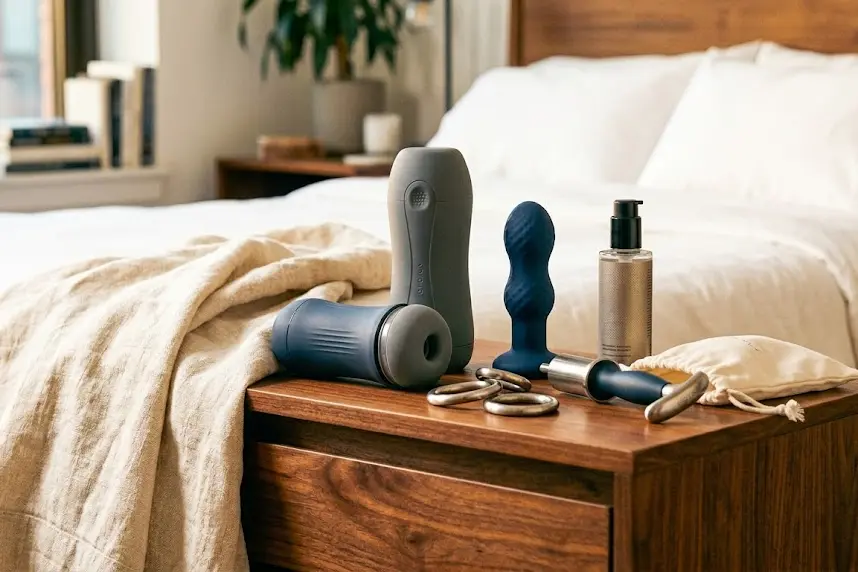
What Male Sex Toys Can Actually Do for Sexual Health
Erectile Function and Sensation
Men who use sex toys regularly tend to report stronger erectile function and more consistent orgasmic response. The basic mechanism isn't complicated: regular, varied stimulation keeps nerve pathways engaged and supports healthy pelvic blood flow over time. Physical therapists reason about tissue responsiveness the same way - structures that are used regularly tend to stay more functional than those that aren't.
A silicone sex ring works by slowing venous outflow from an erect penis, which makes erections firmer and more sustained. This is the same principle behind constriction rings, which urologists sometimes recommend as a first-line, non-pharmacological option for mild erectile dysfunction. For men without ED, the same mechanism simply intensifies the experience. Either way, keeping sessions under 30 minutes and removing the ring immediately if you feel any numbness or cold is non-negotiable.
Ejaculatory Control - in Both Directions
This benefit tends to surprise people. Male masturbation devices have been used in clinical contexts to address both premature ejaculation and delayed ejaculation - and the reason they're useful for both comes down to what they allow: deliberate, low-pressure arousal management without a partner present.
The stop-start technique - first described by urologist James Semans in 1956 and later refined by Masters and Johnson - involves bringing stimulation close to the ejaculatory threshold, pausing, letting arousal subside, and repeating the cycle several times before allowing climax. A 2023 clinical trial published in PLOS ONE confirmed this approach remains one of the most evidence-supported behavioral treatments for premature ejaculation. Using a masturbation cup makes the technique more practical to sustain solo: the textured internal stimulation is realistic enough that the training transfers, while practicing alone removes performance anxiety from the equation.
For delayed ejaculation - where men struggle to climax during partnered sex despite sustained arousal - the more varied stimulation a well-designed masturbator provides can help recalibrate sensory thresholds over time. This is an area where pairing solo practice with guidance from a sex therapist tends to produce better outcomes than either approach alone. For a broader look at how masturbators are categorized and what differentiates them, this guide to types of male sex toys is a practical starting point.
Regular Ejaculation and Prostate Health
Regular ejaculation has been linked to reduced prostate cancer risk in multiple peer-reviewed studies. A 2004 study published in JAMA - drawing on follow-up data from the Harvard Health Professionals Study with over 29,000 participants - found that higher monthly ejaculation frequency was associated with lower prostate cancer incidence. A 2016 update in European Urology extended the same cohort by a decade and the inverse association held. The proposed mechanism is the prostate stagnation hypothesis: regular ejaculation clears the prostate of accumulated fluid, reducing potential exposure to carcinogenic compounds.
The practical implication is straightforward. Maintaining a regular pattern of ejaculation - through any means, including solo activity - appears to support prostate health over the long term. This is independent of which specific device or method is used.
Stress, Sleep, and Mood
Orgasm triggers the release of endorphins, dopamine, and oxytocin - neurochemicals that are among the body's most effective tools for managing acute stress. Men who maintain a regular sexual outlet, solo or partnered, consistently report better sleep and lower baseline anxiety in sexual health research. This is straightforward physiology, not speculation.
What solo devices specifically add is reliable, pressure-free access to that release. Performance anxiety is real and common in men of all ages. Having a solo practice that works consistently - without an audience - builds genuine confidence that often does carry over into partnered experiences. The documented benefits of regular male masturbation extend well beyond the physical, and that's worth taking seriously.
Body Awareness and Self-Knowledge
You can't communicate what you don't know. Men who understand their own arousal patterns - what kind of stimulation works, at what pace, what doesn't - tend to be better at articulating preferences and staying present during sex with a partner. Sex therapists have recommended deliberate solo practice for this purpose for decades. A sex torso or realistic masturbator offers a private, low-pressure environment to develop that self-knowledge without the complexity of a live relationship dynamic involved.

Vacuum Erection Devices: What the Clinical Evidence Says
Vacuum erection devices sit in a slightly different category from other male sex toys. FDA-cleared versions are prescribed medical devices for erectile dysfunction, with a substantive clinical evidence base behind them. A review cited in a PMC clinical overview of post-prostatectomy erectile rehabilitation reported satisfaction and efficacy rates exceeding 80% in relevant clinical populations.
Consumer-grade penis pumps use the same vacuum principle to create temporary increases in blood flow and sensitivity during use. They are not equivalent to prescription devices, and they do not produce permanent size changes - consumer marketing that implies otherwise is not supported by clinical evidence. For men combining a pump with a constriction ring, the combination can be genuinely useful for sustaining erections long enough for partnered sex. The determining factor for safety and effectiveness is build quality: seal integrity controls how consistent and predictable the vacuum is, and inconsistent pressure is the source of bruising and discomfort.

Why Material Quality Is a Health Issue, Not Just Comfort
Not every toy sold for men is body-safe. This matters beyond how something feels.
Toys made from porous materials - unlabeled rubber, jelly compounds, unspecified TPR blends - harbor bacteria in their surface structure even after cleaning. Many of these materials contain phthalates, a class of chemical plasticizers classified as endocrine disruptors. Over repeated use, that exposure adds up. Understanding what sex toys are actually made of before buying is a practical health decision, not overcaution.
Materials that are genuinely body-safe include medical-grade silicone (non-porous, phthalate-free, fully sterilizable), body-safe TPE with clear manufacturer documentation (porous but acceptable with thorough cleaning), and ABS plastic or stainless steel for rigid components like pump cylinders and ring hardware. Silicone's advantages as a material for sex toys - particularly its non-porous surface and chemical stability - make it the default recommendation for anything insertable or wearable. If a product lists its material only as "rubber," "jelly," "soft," or "cyberskin" with no further specification, that's a meaningful warning sign.
For a more detailed breakdown of how different materials compare for male devices specifically, this guide to masturbation cup materials covers what to look for on product labels and what to avoid.
How to Use These Tools With a Specific Goal in Mind
There's a real difference between using a sex toy recreationally and using one with a clear health outcome in mind. The protocol matters as much as the product.
For ejaculatory control (premature ejaculation): Use a masturbation cup with a structured stop-start approach - bring arousal to roughly 80% intensity, pause, let the urge to climax subside completely, then repeat three to five cycles before allowing orgasm. Practice three times per week over four to six weeks. This is the same behavioral method sex therapists have used since the 1950s, adapted for solo use. The advantage of a device over manual stimulation is sustained, realistic sensation without physical fatigue interrupting the practice.
For erectile confidence: Wear a flexible silicone sex ring at the base of an erection during solo sessions. The added engorgement is distinct from unaided erections, and familiarity with that sensation reduces anxiety about it in partnered contexts. Keep sessions under 30 minutes with a ring in place, and remove it immediately at any sign of numbness, cold, or discomfort.
For stress and sleep: Regularity produces more cumulative benefit than occasional intensity. A consistent solo practice three to four times per week builds a more stable neurochemical baseline than infrequent longer sessions.
For couples: Survey data consistently shows that couples who introduce a toy together - whether a vibrating ring worn during intercourse or a masturbator used with a partner present - report higher sexual satisfaction and stronger communication about desire. The conversation the introduction requires tends to be as valuable as the physical experience itself. Learning more about the range of available options for men is a useful first step; this overview of male sex toys beyond simple pleasure covers the broader picture.
When a Device Isn't Enough
Male sex toys support sexual wellness. They are not substitutes for clinical care when something is genuinely wrong. If erectile dysfunction, premature ejaculation, or other sexual function issues are significantly affecting your quality of life - especially if they've developed suddenly, are getting worse, or follow a health event like surgery - a conversation with a urologist or certified sex therapist is the right starting point. A well-chosen device can be part of a broader plan, as it regularly is in sex therapy practice. It shouldn't be the whole response to a problem that warrants professional attention.
Frequently Asked Questions
Can a masturbation cup really help with premature ejaculation?
Yes, when used as part of a structured behavioral practice. The stop-start technique has been a cornerstone of sex therapy since urologist James Semans first described it in 1956. A masturbation sleeve makes solo practice more effective because the stimulation closely resembles partnered sex while the absence of a partner eliminates performance pressure. Consistent practice over four to eight weeks is what produces meaningful improvement - occasional use doesn't have the same effect.
Is it safe to use a sex ring without having erectile dysfunction?
Yes. Most men who use silicone sex rings don't have ED - they use them to intensify sensation and prolong erections. The safety guidelines are the same regardless of why you're using one: never wear a constriction ring for more than 30 minutes, and remove it immediately if you notice numbness, cold, or pain in the penis.
Do penis pumps actually do anything useful?
For erectile dysfunction, FDA-cleared vacuum erection devices have a meaningful clinical evidence base, with satisfaction rates reported above 80% in some clinical populations. Consumer-grade pumps create real temporary increases in blood flow and sensitivity during use. Neither produces permanent size changes. Claims to the contrary - common in consumer marketing - are not backed by clinical evidence, and a pump purchased specifically for size increase is a product bought on false premises.
Will using a sex toy regularly make it harder to climax with a partner?
This concern is common and largely unfounded when devices are used sensibly. The real risk involves using extremely high-intensity stimulation exclusively over a sustained period, which can gradually raise the arousal threshold. Using a masturbator at moderate intensity, and maintaining variety in your sexual activity, avoids this entirely. The concern applies roughly equally to any form of masturbation - there's nothing uniquely problematic about using a device versus using your hand, provided neither is the only source of stimulation you ever experience.
What materials should I specifically avoid?
Avoid anything labeled only as "rubber," "jelly," "soft plastic," or "cyberskin" without further material specification. These are almost always porous and often contain phthalates. Look for products that clearly specify medical-grade silicone, body-safe TPE with manufacturer documentation, or ABS plastic for rigid non-insertable components. A vague or absent material listing is a meaningful red flag - reputable manufacturers specify materials clearly because they're confident in them. This silicone anal toy range is one example of a product category where material specification and non-porous construction matter most.
Are male sex toys useful for couples, or mainly for solo use?
Many are designed specifically for couples. Vibrating rings stimulate both partners during intercourse simultaneously. Masturbators can be incorporated into foreplay or used with a partner present. Survey data consistently shows that couples who introduce sex toys together report higher sexual satisfaction and better communication about desire - the conversation the introduction requires tends to be as valuable as the physical experience itself.


