


You can't see what a product is made of just by looking at it. But when it comes to adult products that contact your skin - or go inside your body - the material is the single most important factor. Design, price, and brand name come second.
Silicone has become the industry standard for a reason. It's non-porous, stable under repeated sterilization, and free of the plasticizers and chemical leachates that make cheaper materials a real health concern. But why silicone has become the material of choice is a different question from which silicone you're actually getting - and that distinction is where most buyers get misled.
This guide covers the silicone grades used in adult products, how the manufacturing process affects safety, what certifications actually mean, and how to tell whether a product is made from what it claims. Whether you're buying for yourself or sourcing products for a business, the same questions apply.
What "Body-Safe" Actually Means
The term appears on countless product listings and has no universal legal definition. Any manufacturer can print it. What it should indicate is that a material has been independently tested for biocompatibility - that it won't cause toxic reactions, irritation, or allergic responses under normal conditions of use.
The gap between "body-safe" as a marketing claim and "body-safe" as a documented material standard is wide. Understanding what "body-safe" actually means when it's backed by certification - versus when it's just packaging language - is the starting point for evaluating any silicone product.
The Three Grades of Silicone: What They Are and Who They're For
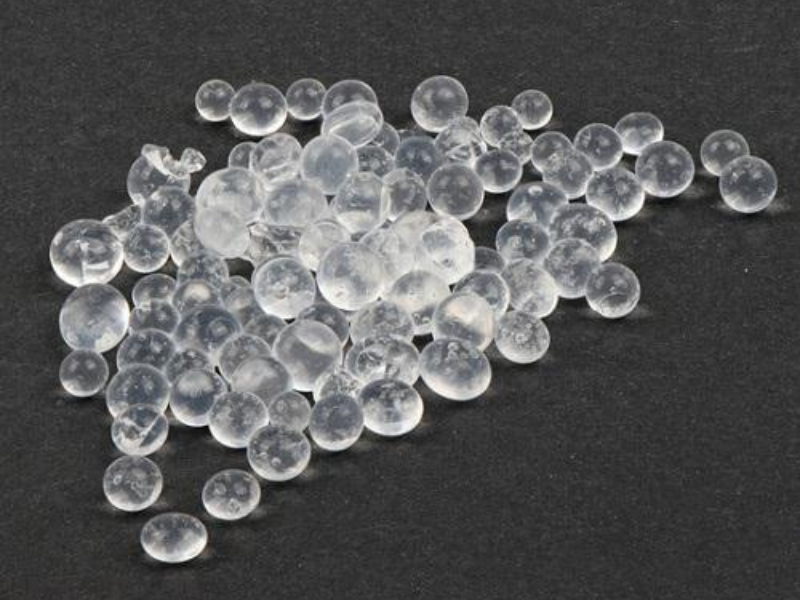
Not all silicone is produced to the same standard. Three categories appear in the adult product market, and only two of them belong there.
Medical-Grade Silicone
Produced to biocompatibility standards originally developed for surgical devices and implants. To qualify, silicone must pass a set of tests defined by standards including ISO 10993, USP Class VI, and FDA 21 CFR Part 177 - covering cytotoxicity (does it harm cells?), sensitization (does it trigger immune responses?), and systemic toxicity (does it cause broader harm after prolonged contact?).
Medical-grade silicone is almost always platinum-cured in controlled manufacturing environments. For hardness, most finished adult products fall between Shore A 10 and Shore A 20 - soft enough to feel natural, structured enough to hold its shape in use.
This is the appropriate standard for any product that goes inside the body.
Food-Grade Silicone
Originally developed for kitchen tools and baby products, food-grade silicone meets safety standards for contact with food and skin under regulations including FDA 21 CFR and LFGB (Germany). It contains no plasticizers, BPA, or heavy metals, and won't leach harmful substances under normal conditions.
The key distinction: food-grade silicone is tested for surface contact with food and skin, not for internal biocompatibility. It hasn't undergone the cytotoxicity and tissue response testing that medical-grade requires. For external adult products - wearables, external vibrators, stimulators that contact skin but don't enter the body - food-grade is appropriate and offers a meaningfully lower cost. For insertable products, the additional testing that medical-grade requires is not optional.
Liquid Silicone Rubber (LSR) vs Solid Silicone
Within either grade, manufacturers work with two different compound forms. Liquid silicone rubber (LSR) starts as a two-part liquid that cures under heat injection molding. It produces more consistent hardness throughout the product, captures finer surface detail, and tends to have a more uniform, silky texture. Solid high-temperature vulcanized (HTV) silicone is more common in lower-cost manufacturing and can be either medical or food grade, but is harder to mold to precise specifications. For intimate products, LSR is generally the higher-quality option at equivalent hardness because the material is more homogeneous - there's less variation between batches.
Industrial Silicone - Why It Doesn't Belong in Adult Products
Industrial silicone is manufactured for engineering, sealing, and construction applications. It may contain processing residues, catalysts, pigments, and fillers that have never been evaluated for skin contact. It is not tested for biocompatibility and has no relevant safety certification for intimate use.
If a manufacturer describes their material only as "high-quality silicone" without specifying grade or providing documentation, the absence of that information is meaningful. Reputable suppliers can name the grade, the curing method, and the certifying body without hesitation.
At a Glance
| Feature | Medical-Grade | Food-Grade | Industrial |
|---|---|---|---|
| Biocompatibility tested | Yes | Partial (surface only) | No |
| Safe for insertable use | Yes | Not recommended | No |
| Safe for external use | Yes | Yes | No |
| Typically platinum-cured | Yes | Sometimes | Rarely |
| Key certifications | ISO 10993, USP VI, FDA | FDA, LFGB | None relevant |

Platinum-Cured vs Peroxide-Cured: Why the Manufacturing Process Matters
The silicone grade describes the raw material standard. The curing process describes how it was made - and both affect the safety of the finished product. This distinction rarely appears on consumer packaging, but it matters.
Silicone must be chemically cured (vulcanized) to transform from a pliable compound into a stable solid. Platinum curing uses a platinum catalyst in a clean reaction that leaves no chemical by-products in the finished material. The result is a highly inert, residue-free silicone. Peroxide curing uses organic peroxide compounds, and the reaction can leave trace decomposition residues in the finished product. Manufacturers can reduce - but not eliminate - this risk through secondary curing, a post-production baking step. In individuals with sensitive skin, peroxide residues may cause irritation, particularly with products used in prolonged contact with mucous membranes.
Understanding how silicone products are manufactured helps explain why platinum curing has become the benchmark for premium intimate products and the baseline expectation in markets with strict regulatory standards.
For consumers: Look for "platinum-cured" or "platinum catalyst silicone" in product descriptions or specification sheets. This detail is increasingly common on quality listings and is worth checking before purchasing insertable products.
For B2B buyers: Require platinum curing in your material specifications. A supplier who cannot confirm the curing method for their silicone is not a supplier you can confidently certify to your customers.
Understanding Shore A Hardness
Silicone products vary widely in how they feel - from almost gel-like softness to firm structural rigidity. This is measured by the Shore A scale. Our Shore hardness guide explains the full scale, but here's what matters for adult products specifically:
- Shore A 5–10: Very soft, close to the texture of an earlobe. Maximum realism, minimal structural support.
- Shore A 10–20: The most common range for intimate products. Balances softness with enough integrity to hold shape in use.
- Shore A 20–30: Noticeably firmer. Better for products that need defined surface texture or structural form.
- Shore A 30+: Firm, comparable to a rubber eraser. Rarely used as a primary contact surface.
One point worth knowing: at the same Shore A value, LSR and HTV silicone don't feel identical. LSR tends to feel more consistent and uniform throughout - the firmness doesn't vary across the product the way it sometimes can with compression-molded HTV. For products where tactile consistency matters, this distinction is relevant to sourcing decisions.
How Silicone Compares to Other Materials
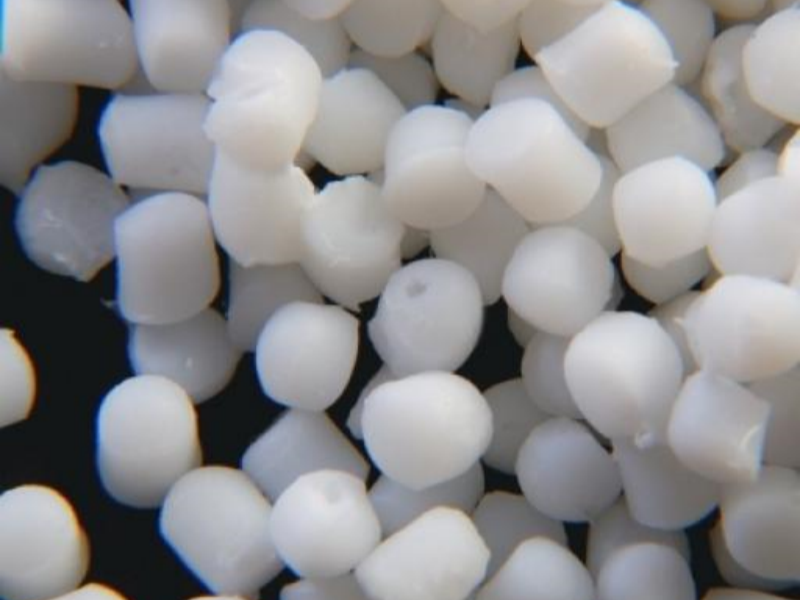
Some buyers arrive at this topic still deciding between silicone and alternatives. Here's an honest comparison of the materials most commonly found in adult products. For a full overview of body-safe materials, including less common options, see our dedicated guide.
Silicone vs TPE/TPR
TPE (thermoplastic elastomer) and TPR are widely used in budget products because they're inexpensive and easy to mold. The fundamental problem is porosity. Their surface contains microscopic channels that trap bacteria, body fluids, and cleaning agents - even after thorough washing. Over time, TPE and TPR can also degrade at the surface, becoming sticky and releasing compounds that should not contact sensitive tissue. For a detailed breakdown, see key differences between silicone and TPE.
For any insertable product, TPE and TPR present real hygiene concerns that repeated cleaning cannot resolve.
Silicone vs ABS Plastic
ABS is a hard, non-porous plastic used safely in adult products - but as structural and mechanical components, not as primary contact surfaces. Motor housings, control panels, and external casings are appropriate uses. ABS is not a substitute for silicone where intimate skin or internal contact is involved.
Silicone vs Borosilicate Glass and Metal
Both borosilicate glass and body-safe metals (stainless steel, aluminum alloy) are non-porous and fully sterilizable. They serve a specific category of products where firmness is a feature. They're not substitutes for silicone in applications that require flexibility, but they are legitimate alternatives for rigid insertable products where their properties suit the intended use.
Material Comparison
| Material | Body-Safe | Porous | Sterilizable | Best For |
|---|---|---|---|---|
| Medical-grade silicone | Yes | No | Yes | All insertable products |
| Food-grade silicone | Yes | No | Yes | External products |
| TPE / TPR | No | Yes | No | Non-intimate structural parts |
| ABS Plastic | Yes | No | Yes | Casings, handles, controls |
| Borosilicate Glass / Steel | Yes | No | Yes | Rigid insertable products |
| Industrial silicone | No | No | N/A | Not for body contact |
Certifications: What They Test, What They Don't, and What to Prioritize
Certifications are the most reliable external signal of material quality - but only if you understand what each one actually evaluates. Knowing what silicone labels often get wrong is just as useful as knowing what the certifications mean.
FDA 21 CFR Part 177
The US Food and Drug Administration standard for materials in contact with food or the human body. It confirms the material won't leach harmful substances under intended conditions of use. This is the baseline certification most commonly cited on consumer product listings and packaging. The full text of FDA 21 CFR Part 177 is publicly available for verification.
LFGB (Germany)
Germany's food and consumer goods safety standard, governing materials that contact food and skin. LFGB requires migration testing - measuring actual substance transfer from the material under specified conditions - which goes further than FDA compliance in some respects. It's the standard benchmark for products sold across European markets and is often seen alongside food-grade claims.
ISO 10993
An international series of standards for the biological evaluation of medical devices, covering cytotoxicity, sensitization, irritation, and systemic toxicity. The ISO 10993-1 standard defines the framework for biocompatibility evaluation. Medical-grade claims from credible manufacturers should be supported by ISO 10993 compliance documentation - not just the label.
USP Class VI
A US Pharmacopeia standard for materials used in medical and pharmaceutical applications. USP Class VI tests are among the most rigorous evaluations for materials that contact biological tissue. Its presence in a supplier's documentation is a strong indicator of genuine medical-grade status.
CE Marking
Indicates that a product meets European safety requirements for sale in EU markets. For adult products, CE covers general product safety compliance. It does not specifically certify silicone grade or biocompatibility testing - it tells you the product passed general safety evaluation, not that the silicone meets a particular standard.
Minimum Requirements by Use Case
- Consumer external products: FDA 21 CFR or LFGB is the baseline
- Consumer insertable products: FDA + ISO 10993 at minimum
- Products for EU market: CE + LFGB
- Highest documented standard: ISO 10993 + USP Class VI + third-party lab report (SGS, Intertek, or Bureau Veritas)
A note on documentation: Certification logos are easy to print. Any supplier can put "FDA-grade silicone" on a spec sheet. What separates legitimate certification from packaging language is the actual test report - a document from an accredited third-party laboratory showing that the specific silicone compound was tested and passed. Ask for reports, not logos.

How to Identify Real Silicone: Five Tests You Can Do Yourself
One of the most common practical concerns is straightforward: how do you know a product is actually made of quality silicone, and not something cheaper dressed up with the same label? These tests don't replace lab analysis, but they reliably distinguish quality silicone from its most common substitutes.
Step 1 - The Smell Test
Quality silicone has little to no odor. A new product may carry a faint, clean manufacturing smell that fades within a day of unpacking. A persistent chemical, rubbery, or plastic-like smell is a warning sign. TPE and PVC have distinctive odors that don't fade with time.
Do this: Unpack and smell the product. If the smell is gone within 24 hours, that's normal. If it persists, be cautious.
Step 2 - The Touch and Rebound Test
Genuine silicone has a smooth, matte surface - not glossy. Pinch a section briefly and release: it springs back immediately and completely. TPE tends to feel slightly tacky, rebounds more slowly, and may leave a faint residue on your fingertips. In our experience reviewing sample materials from multiple suppliers, tacky rebound combined with a faint oily feel is the single most consistent indicator of TPE misrepresented as silicone.
Do this: Pinch and release. Quick, clean rebound is a silicone characteristic. Slow or sticky recovery suggests TPE.
Step 3 - The Pinch-Whiten Test
Silicone whitens slightly at a stress point when pinched firmly, due to its polymer structure. The color returns immediately when you release. TPE does not exhibit this behavior.
Do this: Pinch a section firmly for one second. Silicone shows a brief lightening at the stress point; TPE does not.
Step 4 - The Alcohol Wipe Test
Silicone is chemically stable and doesn't react to isopropyl alcohol. Wipe a colored area with a 70% isopropyl alcohol swab - a genuine silicone product shows no color transfer and no surface change. Color on the swab, or a tacky surface after wiping, indicates lower-grade material or surface coating.
Do this: Firm wipe on a test area. Clean swab and unchanged surface = good sign.
Step 5 - The Flame Test (For B2B Sample Qualification Only)
This test is destructive and appropriate only for material samples in professional sourcing contexts - never for finished retail products. Silicone burns to white powdery ash with minimal smoke and no melting. PVC burns with black smoke and drips. TPE melts and smokes. This provides definitive material identification when evaluating supplier samples.
How to Clean and Store Silicone Products Safely
Material safety doesn't end at purchase. The same non-porous properties that make silicone body-safe also make it straightforward to clean - but the method matters.
Medical-grade silicone without electronic components can be boiled for 3–5 minutes or run through a dishwasher on a hot cycle. This is the most thorough sterilization method. For products with motors or electronics, wipe thoroughly with a 70% isopropyl alcohol solution or a purpose-made toy cleaner, and allow to air dry fully before storage.
For detailed guidance, see how to clean silicone sex toys safely and how to use and store silicone sex toys.
A few practical points: silicone-based lubricants degrade silicone surfaces over time - use water-based lubricants only. Store silicone products separately from TPE or rubber items, as prolonged contact between materials can cause surface degradation. And watch for early signs of material aging: stickiness that wasn't there before, color change, or a surface that picks up lint. These indicate the material has begun to break down and the product should be replaced.
Which Grade Should You Choose?
The decision follows directly from how the product is used.
For insertable products - vibrators, dildos, silicone anal toys, kegel balls - use platinum-cured medical-grade silicone. This is the standard that minimizes risk for internal contact. Shore A 10–20 for most applications.
For external products - wearables, clitoral stimulators, nipple covers, external massagers - food-grade silicone is appropriate. It's safe for skin contact and comes at a lower cost than medical-grade without compromising surface safety. Look for FDA or LFGB certification. Browse our range of silicone vibrators for examples of externally-focused designs.
For B2B buyers and brands, the specification questions that matter most are: What is the silicone grade? Is it platinum-cured? What Shore A range do you offer? Can you provide third-party test reports - not just certification names? A supplier who deflects on any of these questions is a supplier who cannot support your product claims to your own customers.
Frequently Asked Questions
Is all platinum-cured silicone medical-grade?
Not necessarily. Platinum curing refers to the manufacturing process; medical-grade refers to the purity standard and the biocompatibility testing the material has passed. Most medical-grade silicone uses platinum curing, but the grade designation requires documented test results, not just the use of a platinum catalyst.
How can I tell if a product is real silicone before I buy it online?
Before purchase, check whether the product listing specifies a grade (medical-grade or food-grade), names a curing method (platinum-cured), and lists verifiable certifications (FDA, LFGB, ISO 10993). Vague language like "body-safe silicone" or "high-quality material" without specifics is a signal to look more carefully. Once the product arrives, the smell, rebound, and alcohol wipe tests described above will tell you a great deal.
Can I use silicone-based lubricant with silicone products?
No. Silicone-based lubricants can break down the surface of silicone products over time, making them sticky and potentially degrading the material. Use water-based lubricants only with silicone products.
What is the minimum certification I should look for when buying insertable products?
FDA 21 CFR and LFGB are the baseline. For insertable products, ISO 10993 compliance is a stronger standard and worth looking for. If you can find a product with third-party lab documentation from SGS or Intertek, that's the most reliable indicator available to consumers.
What Shore A hardness is best for most adult products?
Shore A 10–20 covers the majority of insertable intimate products. This range offers the balance of softness and structural integrity most users find comfortable. Softer (Shore A 5–10) is more realistic but offers less shape retention; firmer (Shore A 20–30) is better for products with defined surface texture or structural elements.
What is the difference between solid and liquid silicone in adult products?
Solid HTV (high-temperature vulcanized) silicone and liquid silicone rubber (LSR) are two compound forms. LSR is injection-molded from a liquid state, producing more consistent hardness, finer surface detail, and more uniform texture. HTV is more common in lower-cost manufacturing. Both can be medical or food grade, but LSR generally delivers higher production consistency, particularly relevant for insertable products where uniformity matters.
Does the silicone certification apply to the raw material or the finished product?
An important distinction most buyers miss: certification typically applies to the base silicone compound. Additional materials added during manufacturing - pigments, colorants, adhesives, electronic components - are separate considerations. A product made from certified silicone can still contain uncertified additives. Asking a supplier for a complete material declaration, not just the silicone certificate, is the thorough approach.
Is it safe to use TPE products externally?
For very limited external contact (brief skin touch), TPE is not acutely dangerous for most people. The concern is persistent porosity: bacteria and moisture accumulate in the material and cannot be fully removed by cleaning. For any product used regularly on skin, silicone is a better choice. For insertable use, TPE should be avoided.
Summary
The material decisions that matter most are these: use medical-grade, platinum-cured silicone for anything insertable; food-grade silicone is appropriate and sufficient for external use. Certifications are meaningful when backed by documentation - ask for test reports, not logos. And if a product smells chemical, rebounds slowly, or bleeds color onto an alcohol swab, it's telling you something important.
The adult product market spans a very wide quality range, but the information needed to navigate it is available once you know what to look for. If you'd like to explore products built to these standards, browse our complete care and cleaning guide or contact us directly with sourcing or specification questions.


