


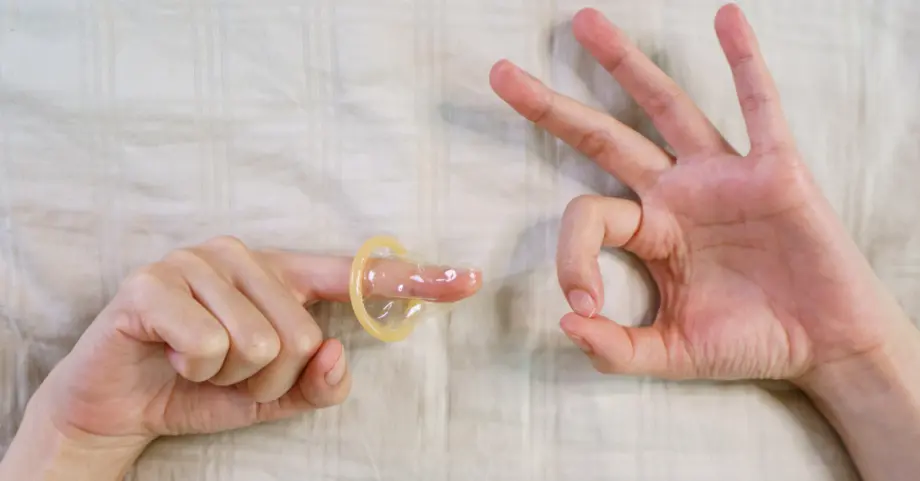
When DIY Makes Sense - and When It Doesn't
Most men who look up homemade pocket pussy methods are in one of a few situations: they want to try this type of toy before spending money, they can't easily receive a delivery, or they're simply curious whether it's worth the investment. All of those are legitimate reasons to experiment. The range of men's sex toys has expanded enormously in recent years, but cost and access are still real barriers for many people.
DIY is a reasonable starting point if you have zero budget, want to figure out your size and pressure preferences before committing, or need something discreet and immediate. It's a less sensible choice if you have sensitive skin, known latex allergies, recent genital irritation, or you're looking for something to use on a regular basis. For repeated use, materials matter a lot - and most household items weren't designed for this kind of contact.
Body-Safe Materials: What to Use, What to Avoid
The safety ratings below are based on two factors: material porosity (which affects how thoroughly something can be cleaned) and known allergenic or irritant risk. Genital skin and mucous membranes are sensitive and absorptive - the wrong material doesn't just cause discomfort, it can introduce bacteria or disrupt your skin's natural pH. Understanding what sex toys are actually made of helps explain why professional products use the materials they do.
✅ Safe to Use
| Material | Why It Works | Key Notes |
|---|---|---|
| Vinyl or nitrile gloves (latex-free) | Non-porous, low allergy risk, smooth surface | Choose powder-free, fragrance-free only |
| Condoms (as inner lining) | Designed specifically for intimate contact | Avoid versions containing nonoxynol-9 (N-9); it disrupts mucosal tissue and increases infection risk |
| Clean cotton cloth or towel | Soft, low irritation, widely available | Wash before use; skip the fabric softener |
| Soft foam sponge (as padding only) | Gentle cushioning | Treat as single-use - porous materials can't be sterilized reliably |
| Water-based lubricant | pH-neutral, skin-safe, compatible with all materials above | Non-negotiable - never substitute with household products |
This is also why silicone is the gold standard in professional products: it's non-porous, hypoallergenic, and can be fully sterilized. Household materials simply can't match that.

⚠️ Use with Caution
Latex gloves: Safe for most people, but latex sensitivity affects a notable portion of the population and can develop even without prior reactions - the American Academy of Allergy, Asthma & Immunology notes that repeated exposure can increase sensitization over time. If you've ever had a reaction to rubber gloves, bandages, or elastic, skip these.
Soft sponges used as padding: Fine as a structural layer, but they absorb moisture and can't be sterilized. Single use only.
Smooth plastic bottles or cups as outer casing: Workable, but check the interior carefully with your fingers first - any ridge, seam, or rough edge becomes a hazard under friction.
🚫 Never Use These
- Hand lotion, body cream, or moisturizer - Most contain fragrances, alcohols, and glycerin that disrupt skin pH and cause irritation even on healthy skin. Not designed for mucous membrane contact.
- Shampoo, soap, or body wash as lubricant - Surfactants strip natural oils and cause burning, particularly on sensitive tissue.
- Rough or abrasive fabrics - Any texture designed for scrubbing or exfoliating will cause micro-tears.
- Hard plastic with sharp edges, glass, or metal - A hairline crack or interior seam becomes a laceration risk under friction.
- Petroleum jelly or oil-based products - Oil-based lubricants degrade latex and nitrile, and petroleum jelly in particular has been associated with increased bacterial imbalance in mucosal environments.
- Any food items - Bacteria multiply rapidly. No exceptions.
Quick rule: If you wouldn't use it on a healing cut, don't use it here.
How to Make a Pocket Pussy at Home - 5 Methods
All five methods below were selected based on three criteria: material safety, ease of assembly with common household items, and adjustability. Start with Method 1 or 2 if this is your first time.
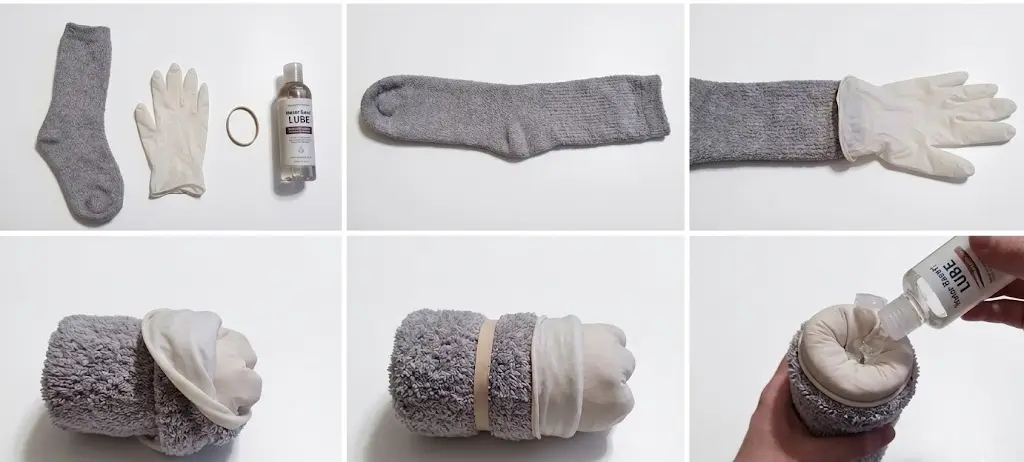
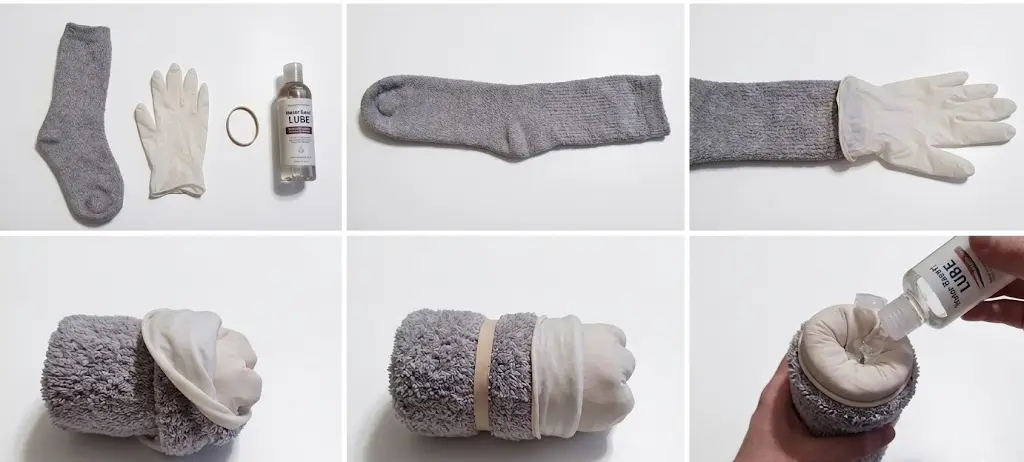
Method 1: Sock & Glove - Easiest, Best for Beginners
You'll need: 1 thick sock, 1 vinyl or nitrile glove, 1 rubber band, water-based lube
- Open the sock fully and lay it flat.
- Insert the glove into the sock with the glove's opening facing outward.
- Fold the glove's cuff back over the sock's rim to create a smooth entry point.
- Secure with a rubber band - firm enough to hold, not so tight it creates a ridge.
- Apply water-based lube generously inside the glove before use.
Tips: Double-fold the sock for more padding and pressure. Add a second sock around the outside for extra grip. The glove is single-use; remove and discard it after. The sock washes normally.
Method 2: Sponge & Cup - Most Popular, Adjustable Tightness
You'll need: 2 soft sponges, 1 vinyl glove, 1 smooth-sided plastic cup, 1 rubber band, water-based lube
- Run your fingers around the inside of the cup. Any ridges, seams, or rough edges need to be smoothed or the cup discarded.
- Place one sponge flat at the bottom of the cup.
- Lay the glove over the sponge with fingers pointing downward into the cup.
- Place the second sponge on top, sandwiching the glove.
- Stretch the glove's cuff up and over the cup's rim, then secure with a rubber band.
- Add lube inside the glove.
Tips: Denser sponges create more resistance. Squeezing the cup during use increases pressure on demand. This method gives you the most control over tightness of any on this list - which is why it's the most commonly recommended starting point. Discard the glove after use; rinse the cup and sponges with mild soap and warm water if reusing, and replace sponges frequently.
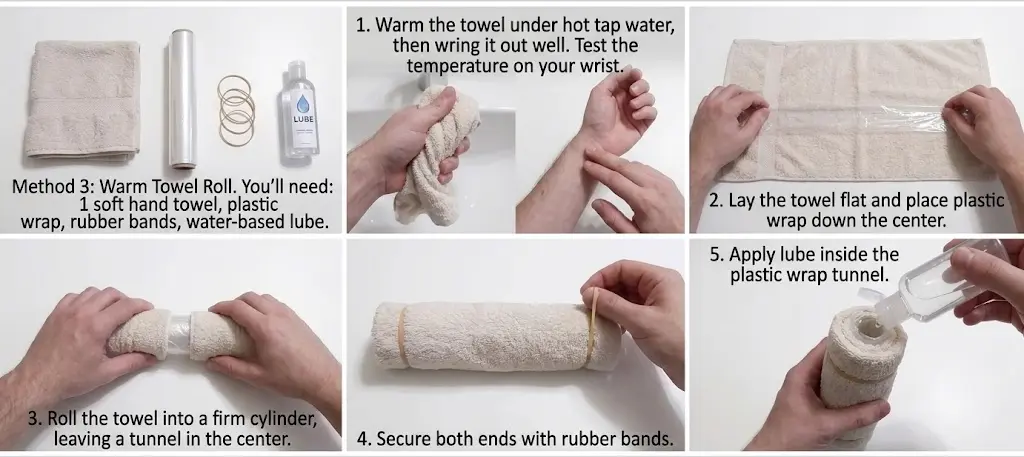
Method 3: Warm Towel Roll - Best Sensation for Warmth
You'll need: 1 soft hand towel, plastic wrap, rubber bands, water-based lube
- Warm the towel under hot tap water, then wring it out well. Test the temperature on the inside of your wrist - if it's uncomfortable there, it's too hot.
- Lay the towel flat and place a strip of plastic wrap lengthwise down the center.
- Roll the towel into a firm cylinder around the plastic wrap, leaving a tunnel in the center.
- Secure both ends with rubber bands.
- Apply lube inside the plastic wrap tunnel before use.
Important: Don't microwave the towel - uneven heating creates hotspots. The warmth fades after a few minutes; placing the rolled towel in a sealed bag submerged in warm (not hot) water for 2–3 minutes before use extends it. Unwrap and launder the towel afterward; discard the plastic wrap.
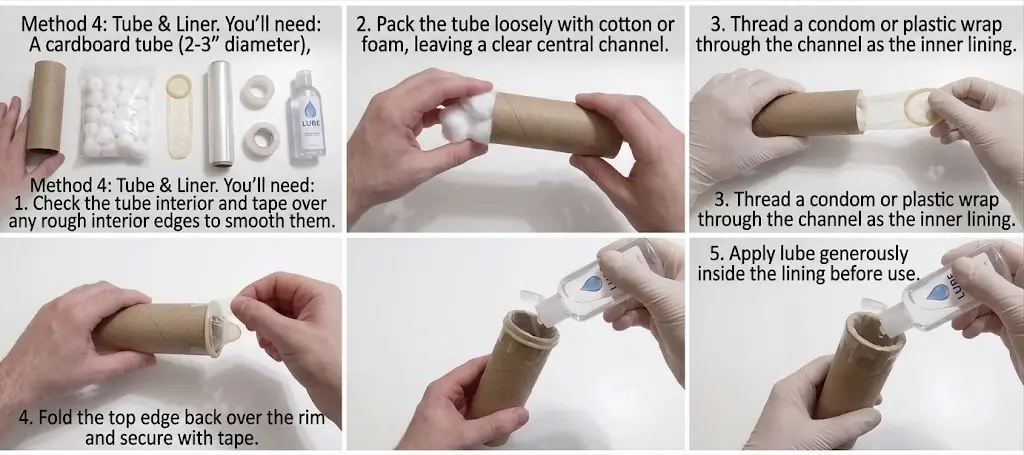
Method 4: Tube & Liner - Most Structured Feel
You'll need: A cardboard tube roughly 2–3 inches in diameter (paper towel roll or mailing tube), a condom or plastic wrap liner, soft padding material (cotton balls or thin foam), tape, water-based lube
- Check the tube interior and tape over any rough interior edges to smooth them.
- Pack the tube loosely with cotton or foam, leaving a clear central channel.
- Thread a condom or plastic wrap through the channel as the inner lining.
- Fold the top edge back over the rim and secure with tape.
- Apply lube generously inside the lining before use.
Tips: This is the most stable of the five methods and the one most suited to hands-free masturbation techniques when propped against a surface. Discard the inner lining after use.

Method 5: Balloon Glove - For Texture Variation
You'll need: 1 balloon (non-latex preferred), 1 plastic cup, soft padding, rubber band, water-based lube
- Inflate the balloon about halfway, then let half the air back out - you want it pliable, not rigid.
- Fit the balloon's opening over the cup's rim.
- Pack soft padding around the balloon inside the cup for support.
- Secure the balloon's edge to the rim with a rubber band.
- Apply lube inside the balloon before use.
Tips: Half-inflated tends to work best - fully inflated is too firm, fully deflated loses all texture. Note that standard balloons often contain latex; if you have any sensitivity, skip this method entirely. Discard the balloon after use.
How to Clean and Store Your Homemade Pocket Pussy Safely
Many DIY guides spend most of their words on the setup and two sentences on cleanup. That's the wrong proportion, especially for something used in intimate contact. Knowing how to clean sex toys properly matters - and with homemade versions, it matters more, not less, because most household materials are porous.
Before You Use It
- Check all surfaces for rough edges, cracks, or uneven seams
- Test any new fabric material on the inside of your forearm for 15 minutes before use (watching for redness or itching)
- Have water-based lube ready - and use more than you think you need
- Don't proceed if you have any active skin irritation, cuts, or infection in the area
After Use
Single-use components (gloves, condoms, balloons, plastic wrap): Remove carefully, fold inward, and discard immediately. Don't rinse and reuse.
Reusable components (towels, cups): Rinse immediately with warm water, wash with a small amount of unscented mild soap, rinse thoroughly, and air dry completely before storing. Any moisture trapped inside is how bacteria grow.
Stop and Assess If You Notice Any of These
Redness, swelling, or warmth in the area that doesn't settle within a few hours. Burning or stinging during or after use. Skin that looks chafed, broken, or raw. Unusual discharge or odor in the days following. Any persistent pain. These are signs of irritation or early infection - stop use, clean the area gently with water, and allow recovery time. If symptoms persist beyond 48 hours or worsen, see a doctor.

DIY vs. Buying a Pocket Pussy: An Honest Comparison
At some point it's worth asking whether DIY is actually getting you what you want. The table below is a realistic breakdown - not a sales pitch.
| Factor | DIY | Entry-Level Product ($20–40) | Mid/High-End ($50+) |
|---|---|---|---|
| Upfront cost | ~$0–5 | $20–40 | $50–150+ |
| Material safety | Depends on your choices | Certified body-safe TPE or silicone | Medical-grade silicone |
| Sensation vs. DIY | Baseline | Noticeable improvement | Significant improvement |
| Internal texture | None | Basic canal | Varied and custom |
| Cleaning ease | Difficult (porous materials) | Moderate | Easy (non-porous) |
| Durability | Single to a few uses | Months with care | 1 year+ |
| Vibration / features | None | Sometimes | Common |
DIY makes the most sense when you're genuinely curious but uncertain enough that spending money feels premature. If you try these methods and enjoy the experience, that's useful information - it means you'd likely enjoy a purpose-built masturbator significantly more. For anyone planning to use one regularly, a product made from certified body-safe materials is a better long-term choice on both safety and sensation grounds. A broader look at types of male sex toys may also help you figure out which category fits your preferences.
FAQ
Is making a homemade pocket pussy actually safe?
A homemade pocket pussy can be safe when you use non-porous, fragrance-free materials (like vinyl gloves or condoms) as the contact layer, apply adequate water-based lubrication, and treat single-use components as genuinely single-use. The risks come from skipping any of those steps. Our broader guide to DIY sex toys for men covers the safety framework in more detail.
What household items are safe to use?
The safest household items for the contact layer are powder-free vinyl or nitrile gloves and condoms (without spermicide). For padding and structure, clean cotton towels, soft sponges, and smooth-sided plastic containers work well. The inner contact surface is what matters most - it should always be non-porous, smooth, and clean.
Can I use hand cream or lotion instead of lube?
No. Lotions and hand creams contain fragrances, alcohols, and pH-disrupting ingredients that irritate genital skin. They're also not compatible with latex or nitrile gloves, which are the safest inner liner options. Use water-based lubricant designed for intimate use - it's inexpensive and available in most pharmacies.
How many times can I reuse a DIY pocket pussy?
Components like cotton towels and plastic cups can be reused after thorough washing and complete drying. Gloves, condoms, balloons, and plastic wrap are single-use - full stop. For anyone interested in the material differences in masturbator cups, non-porous materials are what make professional products genuinely reusable in a way that household options aren't.
What's the best method for a first-timer?
Method 2 - the Sponge & Cup - is the most recommended starting point. It's adjustable, uses minimal materials, and gives you consistent results across multiple tries. Method 1 (Sock & Glove) is simpler to assemble but offers less control over pressure.
Does regular masturbation with a sex toy have health benefits?
There's reasonable evidence that masturbation in general supports stress relief, sleep quality, and sexual self-awareness. If you want to go deeper on this topic, the article on the benefits of male masturbation covers the research honestly.
Final Thoughts
Making a pocket pussy at home is genuinely straightforward - most of these methods take five minutes or less. The material choices and cleanup habits you build now are what determine whether the experience is actually enjoyable and safe. If you try one of these methods and find you like it, the natural next step is to look at what a properly designed masturbation cup offers - better texture, certified materials, and something you can actually clean properly. For anyone curious about whether the upgrade is worth it, the piece on male sex toys and sexual health addresses that question directly.
This article is intended for adults aged 18 and over. If you experience persistent irritation, pain, or any unusual symptoms, stop use and consult a medical professional.
About the Author
This article was written by the content team at Shenzhen Hejiamei Technology Co., Ltd., a silicone adult product manufacturer based in Shenzhen, China. With over a decade of experience in material science, product safety testing, and OEM manufacturing for global markets, the team draws on direct factory knowledge to provide practical, honest guidance on sex toy use, safety, and materials. Our full product range is available at siliconeproductsextoys.com.


