


This guide covers how to store sex toys safely: from the two steps that must happen before anything goes away, to the material compatibility rules most people skip, to practical storage options for every living situation.

Why Proper Storage Directly Affects Your Health
An unprotected sex toy sitting in the wrong environment collects dust, lint, and airborne bacteria between uses. When that toy is used again, those contaminants transfer directly to sensitive tissue - one of the most common but least recognized triggers for recurring yeast infections and bacterial vaginosis.
Poor storage also degrades the toys themselves. Battery corrosion, motor damage from heat, and chemical reactions between incompatible materials can make a toy unsafe, even if it still powers on. Getting storage right from the beginning protects both your health and the toys themselves.
Before You Store: Two Steps That Are Non-Negotiable
No storage solution compensates for skipping these two steps after every use.
Step 1: Clean Before Storing
Clean every toy after each use, before putting it away. Leaving lubricant and body fluids on a toy's surface - even inside a fabric pouch - creates the bacterial growth that's difficult to eliminate later. Non-porous materials like medical-grade silicone, glass, and stainless steel can be washed with warm water and mild soap. Porous materials like TPE and TPR need gentler handling and, more importantly, very thorough drying.
For a full breakdown by material, our guide to cleaning sex toys the right way for each material covers the differences in detail.
Step 2: Dry Completely - Not Mostly
After washing, pat dry with a clean cloth, then leave the toy on a clean, dry surface until it's completely dry to the touch - typically at least 20 minutes, longer for toys with textured surfaces, internal channels, or multiple attached components. Storing a toy that's even slightly damp creates the warm, enclosed conditions that bacteria and mold need to grow inside a closed pouch.
How to Store Sex Toys by Material Type
Material compatibility is where most storage mistakes happen. Some materials react chemically when they touch during storage, causing surface degradation that makes the toy both unpleasant and unsafe to use. Knowing what your toys are actually made of is the first step.
| Material | Safe to Mix With? | Best Storage | Avoid |
|---|---|---|---|
| Medical-grade silicone | Silicone only | Cotton or satin pouch | Airtight plastic; other materials |
| ABS hard plastic | Most materials | Any breathable pouch | Humid environments |
| Glass or stainless steel | Each other | Hard-shell padded case | Soft pouches alone (breakage risk) |
| TPE / TPR | Same material only | Separate cotton pouch | Silicone toys |
| Jelly / PVC | Nothing | Isolated sealed bag | Any other toy material |
On jelly toys specifically: Jelly material contains phthalates - chemical plasticizers that the FDA has identified as a concern in consumer products. These can leach onto other toy surfaces during storage. If you own jelly toys, store them completely isolated from everything else - or consider replacing them with a body-safe alternative like a medical-grade silicone vibrator. For a closer look at why silicone has become the material standard in this category, see why silicone is considered the safest material for sex toys.
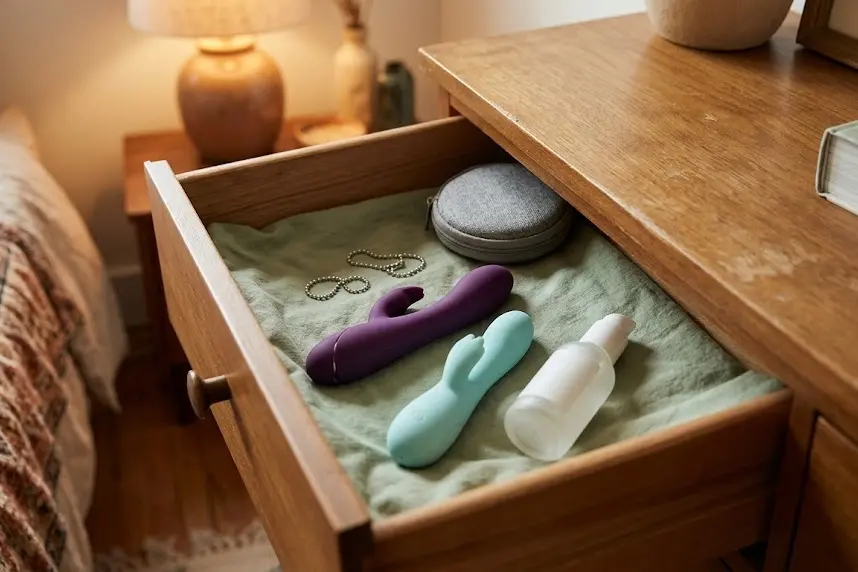
8 Habits for Safer Sex Toy Storage
1. Use Breathable Storage, Not Airtight Containers
Zip-lock bags and sealed Tupperware trap any remaining moisture inside, creating conditions for mold and bacteria to develop on the toy's surface. Use breathable fabric instead - cotton pouches, satin drawstring bags, or purpose-made fabric cases allow air to circulate while keeping dust and debris out. This single switch eliminates one of the most common storage-related hygiene problems.
2. Keep Different Materials Separated
Use a separate pouch for each toy, or group only toys made of the same material. Silicone stored against TPR, for example, can degrade at the contact point - producing a sticky or pitted surface that means the toy is no longer safe to use. Labeling small individual pouches makes this habit easy to maintain consistently.
3. Choose a Cool, Dark, Dry Location
Three environmental factors quietly damage toys over time:
- Heat degrades rechargeable battery cells and can warp both plastic and silicone. Keep toys away from radiators, sunny windowsills, and parked cars in warm weather.
- Humidity encourages bacterial growth even inside closed pouches. The bathroom - however convenient - is one of the worst storage locations in most homes.
- Light causes gradual discoloration in some silicone and plastic toys. A drawer, a closed wardrobe shelf, or a dedicated storage case all work well.
4. Remove Batteries Before Storing
Batteries left inside a powered-off toy drain slowly and, in worst-case scenarios, leak corrosive fluid that permanently damages the toy's internals. Take batteries out after use and store them separately. You'll also avoid the particular frustration of a toy that's completely dead when you actually want it.
5. Store Charging Cables Loosely with the Toy
For rechargeable toys, keeping the cable in the same pouch means it's there when you need it. Don't wrap the cord tightly around the toy or charger - this stresses the connectors and shortens cable life. For model-specific advice on charging cycles and intervals, our vibrator charging guide covers the details. If a rechargeable toy has stopped holding charge properly, our vibrator troubleshooting guide can help identify whether it's a storage or charging issue.
6. Give Anal Toys Their Own Dedicated, Labeled Storage
Anal toys should always be stored separately from toys used in other ways, and labeled clearly. The bacterial considerations involved in anal play make cross-contamination a real risk - dedicated storage removes any ambiguity, even after thorough cleaning. A clearly labeled individual pouch or small case is sufficient. Our guide to sterilizing silicone anal plugs covers the full cleaning process. You can also browse our range of body-safe silicone anal toys if you're looking for materials that are easier to clean and maintain.
7. Use Individual Pouches Inside Larger Cases
If you store multiple toys in one box or case, each toy should have its own pouch before going in. Even toys of the same material will develop friction marks on each other over time if they're in direct contact. The pouch protects the surface; the case protects everything from outside. Organization as a side benefit: it's much easier to find a specific toy without pulling everything out.
8. Do a Periodic Maintenance Check
Every few months, take everything out and run through a quick checklist:
- Charge rechargeable toys to maintain battery cell health
- Replace batteries in any battery-powered toys
- Inspect surfaces for cracking, stickiness, discoloration, or off smells
- Check charging cables for fraying at the connectors
A toy showing surface deterioration - particularly cracking or unexplained stickiness on silicone - should be replaced rather than used. For a broader overview of how to care for silicone toys across their lifespan, see how to use and store silicone sex toys.
Discreet Storage by Living Situation
Where you store toys matters as much as how - especially in shared homes.
If You Have Kids at Home
Height and a lock are the two principles that matter. A lockable box on a high wardrobe shelf is significantly more secure than a bedside drawer or under-bed storage - which tend to be the first places curious children explore. Neutral, non-descript exterior packaging adds an extra layer of discretion without requiring anything to be hidden. Book-shaped safes, plain travel cases, and decorative lidded boxes all work well because they don't suggest their contents.

If You Live with Roommates
A lockable case or padded bag with a zip lock is worth the investment. Discreet exterior design matters here too: a plain zippered case, a small toolbox, or a cosmetics-style travel bag are all options that don't communicate their contents to anyone who might see them. One practical detail people overlook: avoid leaving charging cables visible on shared power strips - they're more recognizable than the storage containers themselves.
If You Travel Frequently
A dedicated travel pouch keeps toys protected in luggage and prevents accidental activation. Remove batteries before packing, and enable the travel lock feature on any rechargeable toys that support it. Vibrating toys are recognized but not prohibited by TSA. Packing them inside a lockable pouch within your main bag is straightforward and avoids any unnecessary delay at security.
What to Look for in a Storage Solution
When choosing a storage container - whether a purpose-built case or a creative everyday alternative - these are the criteria that actually matter:
- Breathable fabric: cotton, satin, or microfiber rather than sealed synthetic material or plastic
- Neutral exterior: nothing that identifies the contents to anyone who sees it
- Appropriate size and shape: the toy should fit without bending, compressing, or touching the sides under pressure
- A lock, if relevant: for shared living situations, even a simple zip lock adds meaningful privacy
- Antimicrobial lining: a useful feature in purpose-built cases, though not essential if you're cleaning toys properly before storage
To explore the full range of body-safe toys available across different categories, visit our sex toys for women collection or browse our complete product range.
Common Storage Mistakes Worth Avoiding
- Storing toys before they're fully dry - slight dampness inside a closed pouch is enough for bacterial growth to take hold
- Using airtight sealed bags - they trap moisture and create exactly the conditions you're trying to prevent
- Piling different material toys in the same container - leads to chemical surface degradation at contact points
- Leaving toys uncovered under the bed - dust and pet hair accumulate faster in floor-level spaces than almost anywhere else in the room
- Keeping batteries inside between uses - slow leaks are more common than most people expect, and the damage they cause is permanent
Frequently Asked Questions
Can you store different sex toys together?
Only if they're made of the same material. Silicone should be stored with silicone; glass and stainless steel can share a case; TPE and TPR should be kept separate from everything else. Mixing incompatible materials - particularly jelly or TPR against silicone - causes surface degradation that can make the toy unsafe to continue using.
Is it safe to store sex toys in a plastic bag?
Not in an airtight sealed bag. These trap moisture and create conditions for bacteria and mold to grow on the surface. A breathable fabric pouch is the right choice for most toys. The one exception: jelly or PVC toys, which need to be isolated from other materials - a sealed bag works there, but only for that material, stored alone.
Do sex toys expire or go bad?
There's no fixed expiration date, but a toy should be replaced when it shows signs of surface breakdown: cracking, unexplained stickiness on silicone, discoloration, or a smell that wasn't there before. These indicate material degradation - the toy is no longer body-safe, and cleaning won't reverse the damage.
How do I store sex toys discreetly with kids in the house?
A lockable case stored somewhere a child can't easily reach without deliberate adult effort is the most reliable approach. High wardrobe shelves work better than bedside tables or under-bed storage - children tend to explore those first. Choosing containers with neutral, non-descript packaging adds another layer of security even if they're found.
Should sex toys be kept in their original packaging?
Original packaging is fine for short-term storage after purchase, but it isn't designed for ongoing use. Most product boxes don't protect against dust, don't prevent material-to-material contact, and aren't breathable. A proper fabric pouch or dedicated storage case serves the toy better for regular long-term storage.
How do I know when a toy actually needs to be replaced?
Surface changes are the clearest signal: cracks, a newly sticky texture on silicone, visible discoloration, or any smell that's developed since the toy was new. A toy showing these signs should not be used. The material breakdown causing those changes can trap bacteria that thorough cleaning won't remove, and the degraded surface can cause irritation to sensitive tissue.
Keep It Simple, Keep It Consistent
The basics of safe sex toy storage come down to a short list: clean and fully dry before anything goes away, store each toy in breathable fabric, keep incompatible materials apart, and choose a location that's cool, dry, and private given your situation.
Start with one breathable pouch per toy and a sensible location. From there, better organization and more tailored solutions can come as your collection and habits evolve. The goal is a routine simple enough to do every time - because a storage habit that only happens occasionally isn't really a storage habit at all.


